In a West Side Story vibraphone passage, clarity is not only a question of how a note begins. It also depends on what is still ringing when the next note arrives. A mallet change may alter the attack, while the pedal changes the space around it.
The Instagram publication featuring Lise Duarte Nuñez and MG Mallets’ longer video provide a starting point for this preparation. Rather than treating a manufacturer’s description as a guarantee, use a short passage from your own part to test the sound you need.
Watch the West Side Story vibraphone excerpts
If the player is blocked by your privacy choices, you can watch the video on MG Mallets’ YouTube channel.
Confirm which West Side Story score you are using
The stage musical and Symphonic Dances from West Side Story are not interchangeable titles for the same set of parts. The Leonard Bernstein Office dates the orchestral suite to 1960 and describes nine connected sections. LA Phil’s work guide includes vibraphone in its percussion instrumentation.
Before assigning rehearsal marks, check the work title, arrangement, part and excerpt limits on your copy. The broad title of a social-media video does not establish all of those details. This guide therefore proposes a listening method, not a bar-by-bar analysis of an unidentified arrangement.
For the orchestral suite, read across the surrounding section to understand what your line supports. Is it an exposed entrance, part of a shared rhythm, or colour underneath another voice? Establish that function from the score before deciding how prominent the attack should be.
Listen to attack, sustain and release separately
Yamaha’s instrument guide explains that releasing the pedal brings the damper into contact with the bars to stop their vibration. That mechanical fact gives you a useful distinction: the struck note and its ending are related musical decisions, but they are not the same action.
Choose a short phrase and describe three intended results:
- Attack: how clearly should each new note speak within the dynamic and texture?
- Sustain: which sounds should overlap, and which should remain separate?
- Release: where should the previous resonance end relative to the next event?
Keep those answers specific to the passage. Clear articulation does not mean the driest possible sound, and a connected line does not mean leaving every note ringing together.
Check the pedal before changing mallets
Keep the same mallets, instrument, intended dynamic and tempo. Play through the chosen phrase using your present pedalling plan. Listen beyond the busy figure into the following note or silence.
If unwanted resonance remains, locate it in the score and test one feasible adjustment to the release. If the phrase becomes disconnected, check whether the adjustment removed sound you intended to keep. Work slowly enough to notice the difference, then restore the passage’s pacing.
This is not a universal pedal pattern for West Side Story. The notation, harmonic context, instrument response and ensemble balance remain the reference. An unfamiliar damping technique deserves separate work with your teacher, not an improvised change during a fast run.
Compare mallets without changing every other variable
The MG Mallets video description identifies V102 and V103 models. Those are equipment details from a manufacturer publication, not proof that one model will produce your intended result on every instrument or in every room.
If you already have two suitable pairs, compare them using the same short phrase and pedalling intention. Keep the recording position stable and avoid making one take deliberately louder. Listen to the first attack, the inner notes, and what remains after the phrase ends.
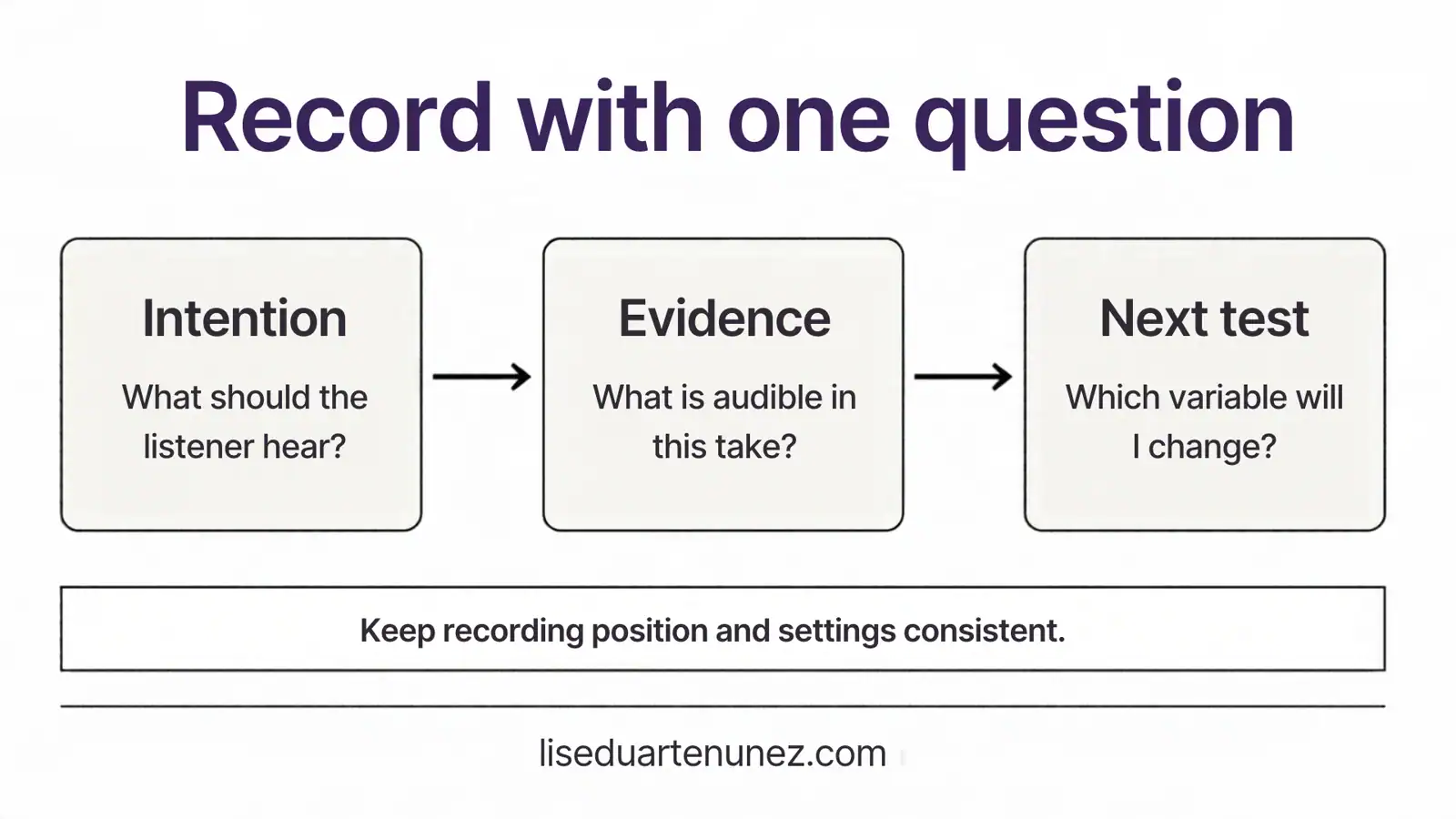
Reverse the order of the pairs and check the impression again. Record a difference you can locate, such as a less distinct inner note in one take, instead of declaring an entire model unsuitable. You are comparing complete mallets and performances, not isolating hardness as the only cause.
Restore the musical context
A solo recording cannot establish projection through an orchestra. Treat it as a local check, then revisit balance with the ensemble when possible. Preserve the written dynamic and the direction of the phrase rather than pursuing a brighter sound for its own sake.
For a repeatable recording setup, see how to record percussion practice. For the preparation before an exposed note, use the orchestral entrance guide. Both connect with MTDM: define the sound before deciding which means to change.
Questions about West Side Story vibraphone preparation
Will harder mallets necessarily make the passage clearer?
Do not decide from the label alone. Check the attack, ringing overlap, dynamic and surrounding texture. Change one practical variable and listen again before attributing the result to the mallets.
Should I lift the pedal after every note?
Not as a general rule. Read the required durations and musical connections in your part, then test whether your pedalling produces them. A fixed pattern can remove wanted resonance as easily as unwanted overlap.