The glockenspiel passages in Mozart’s The Magic Flute are part of a stage conversation. Papageno’s bells can interrupt, charm and change what happens around him. Preparing them means hearing the vocal and dramatic context, not only learning a line of bright notes.
Lise Duarte Nuñez’s Instagram excerpt invites that question of sound and character. The practice ideas below apply to the passage in your own production or audition part; they do not identify the exact aria or bars from the clip alone.
Watch the Magic Flute demonstration
If the player is blocked by your privacy choices, you can watch this video on YouTube.
Understand what the bells do on stage
In the Mozarteum’s critical libretto edition, Papageno turns to his glockenspiel in the first-act finale. Monostatos and the slaves respond with Das klinget so herrlich and leave. The instrument is not simply decoration: its sound changes the scene.
That gives you a practical question before an entrance: who is singing or acting now, and what should the bells contribute? Read the words immediately before and after your passage. Distinguish an instrumental response from notes that share space with a vocal line.
Use the score and the production’s instructions to establish timing. The stage action may explain why an entrance matters, but it is not permission to invent a pause or override the conductor’s cue.
Historical colour is a question, not a fixed mallet recipe
Today’s mallet-played orchestral glockenspiel should not automatically be equated with the instrument heard in 1791. Yamaha’s guide to the keyboard glockenspiel describes the keyboard tradition associated with The Magic Flute and explicitly notes uncertainty about the original instrument’s construction.
Avoid turning that history into a claim that one modern material reproduces Mozart’s exact sound. Begin instead with the score, the instrument provided and the colour required by the production. A historical instrument label does not settle the balance with a particular singer in a particular theatre.
For the editorial background to the opera, the New Mozart Edition’s foreword also distinguishes surviving evidence from later stories. Keep that distinction when discussing the bells’ history.
Prepare the entrance from the vocal cue
Choose one entrance and mark three things in your copy: the preceding cue, the position of your first note, and the event that follows your phrase. If a sung word is your landmark, check its place in the musical pulse rather than relying on the text alone.
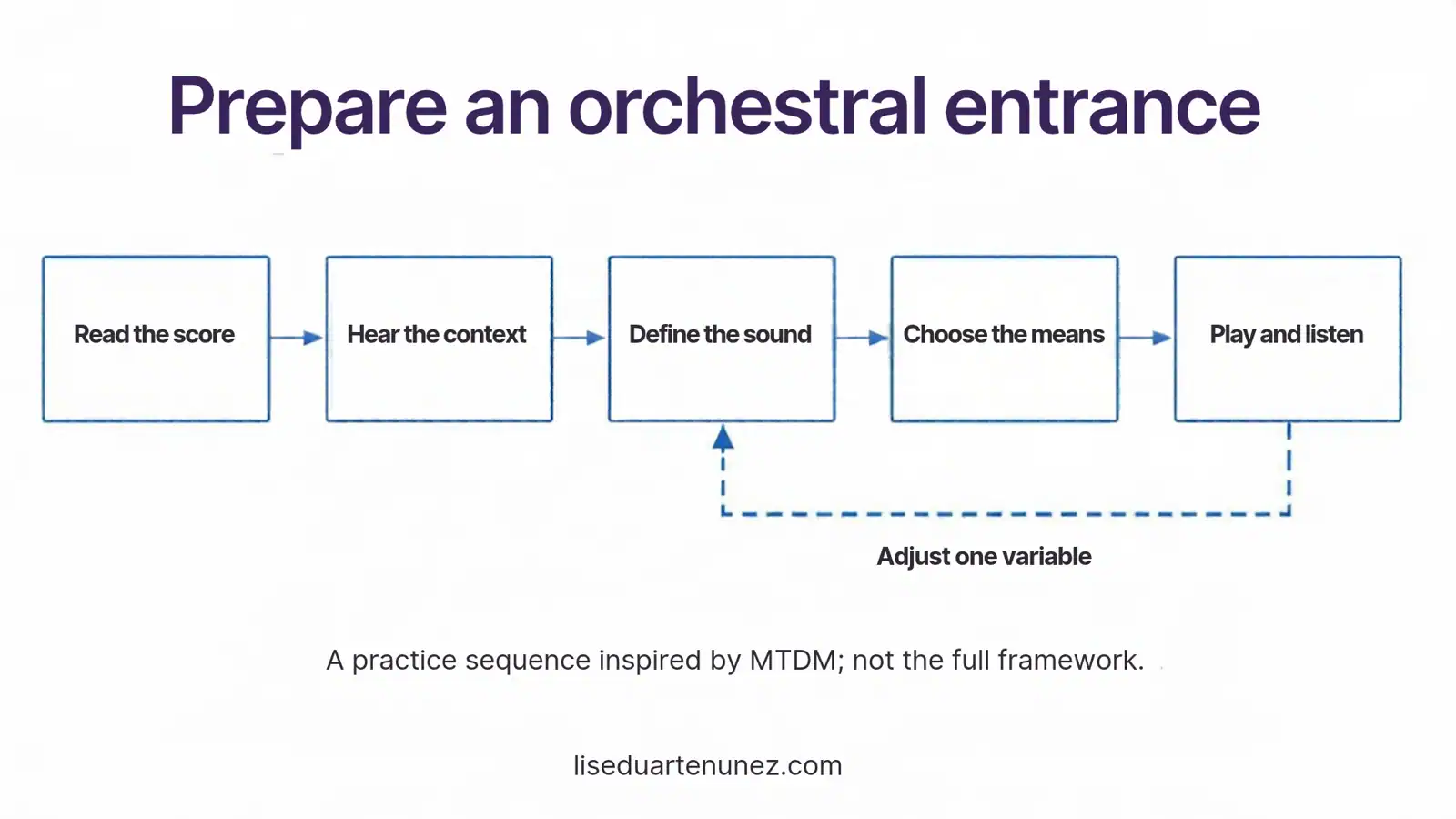
Speak or sing the surrounding line as far as you can follow it accurately, then count into the entrance. Restore the instrument and continue beyond the first attack. The orchestral entrance guide develops this sequence without reducing preparation to a starting signal.
Keep brightness from becoming the only goal
For a passage that overlaps a voice, listen for both the bell line and the singer’s words. Ask a colleague at a useful listening position whether the relationship you intend is audible. A recording beside the instrument cannot establish what an audience hears across the pit and stage.
If you compare two suitable mallets you already use, keep the phrase, intended dynamic and listening position similar. Evaluate whether the new attack serves the scene, not simply whether it sounds brighter on its own. Follow the production’s balance decisions rather than trying to win a solo comparison.
Also listen after the last note. Does the resonance leave space for the next word or instrumental event? Establish the desired duration before choosing any feasible release adjustment; do not impose a single damping pattern on every passage.
Return to the complete scene
After local work, play from the preceding cue through the following event. Check whether preparation, articulation and resonance still make one phrase. Record a question you can investigate, not a verdict about the singer or the equipment.
This is the connection with MTDM: understand the musical function, imagine the result, choose practical means and evaluate them. The practice recording guide can help organise that review, with the limits of the microphone position kept in view.
Questions about The Magic Flute glockenspiel
Should the bells always be as bright as possible?
No single colour answers every scene. Check the written dynamic, the voice, the orchestral texture and the production’s intended character. Clarity and prominence are not the same thing.
Does the historical instrument tell me exactly which mallets to use?
No. The historical evidence does not provide a universal prescription for a modern instrument. Compare viable options in context, and follow the score and conductor’s requirements.