In the first-movement timpani excerpt from Beethoven’s Ninth Symphony, the end of a sound can matter as much as the attack. A strong roll, a resonant short note and a controlled release do different jobs. Treating them all with the same damping habit can hide those differences.
Lise Duarte Nuñez’s Instagram practice notes identify the passage as measures 16–35 and focus on that relationship between energy and resonance. The listening sequence below develops the question without turning one interpretation into a universal rule.
Confirm the first-movement excerpt
The University of New Mexico’s graduate audition document names first-movement bars 16–35 among possible Beethoven Ninth timpani excerpts. It also lists a later selection. These are distinct passages; check your own audition instructions rather than preparing whichever Ninth excerpt a search result happens to show.
The Eastman School of Music’s study of the symphony describes how the first theme emerges from the opening texture. That larger context is worth hearing before practising an isolated timpani entrance: consider what has been building and what the next change needs to reveal.
Verify the movement, numbering and written dynamics in your edition. The suggestions here are practice decisions, not additional markings attributed to Beethoven.
Separate the written note from the release decision
A rest tells you not to strike a new note at that position. How the previous sound ends still needs to be considered with the notation, instrument, room and musical context. Neither “always damp at a rest” nor “always let it ring” is a sufficient plan.
For each event you want to examine, write two separate intentions: where the attack belongs, and how much of its resonance should remain before the next event. Include the following orchestral texture in the question. A release that sounds tidy alone may remove useful weight; a satisfying ring alone may cover a quieter return.
Do not rewrite the rhythm to match a preferred sound. First establish the written timing, then test whether the sound’s duration supports it.
Use Lise’s notes as hypotheses to test
In the accompanying Instagram caption, Lise proposes keeping the opening fortissimo rolls strong, retaining resonance on the downbeat at bar 19, and using more discreet damping around bars 21–23. Near bars 34–35, her notes distinguish allowing a short note to ring from preparing the following piano arrival with a release.
Read those as connected interpretive choices for this passage, not as proof that every room or set of timpani needs identical movements. Check their locations against your part and listen to the transition they are intended to shape. This article does not supply a new transcription or prescribe an exact damping instant for every performance.
Compare the transition, not just the isolated note
Choose one boundary near the change into the softer texture. Begin far enough before it to establish the phrase’s energy, and continue into the quieter music. Use your existing safe technique and work at a tempo where the preparation is manageable.
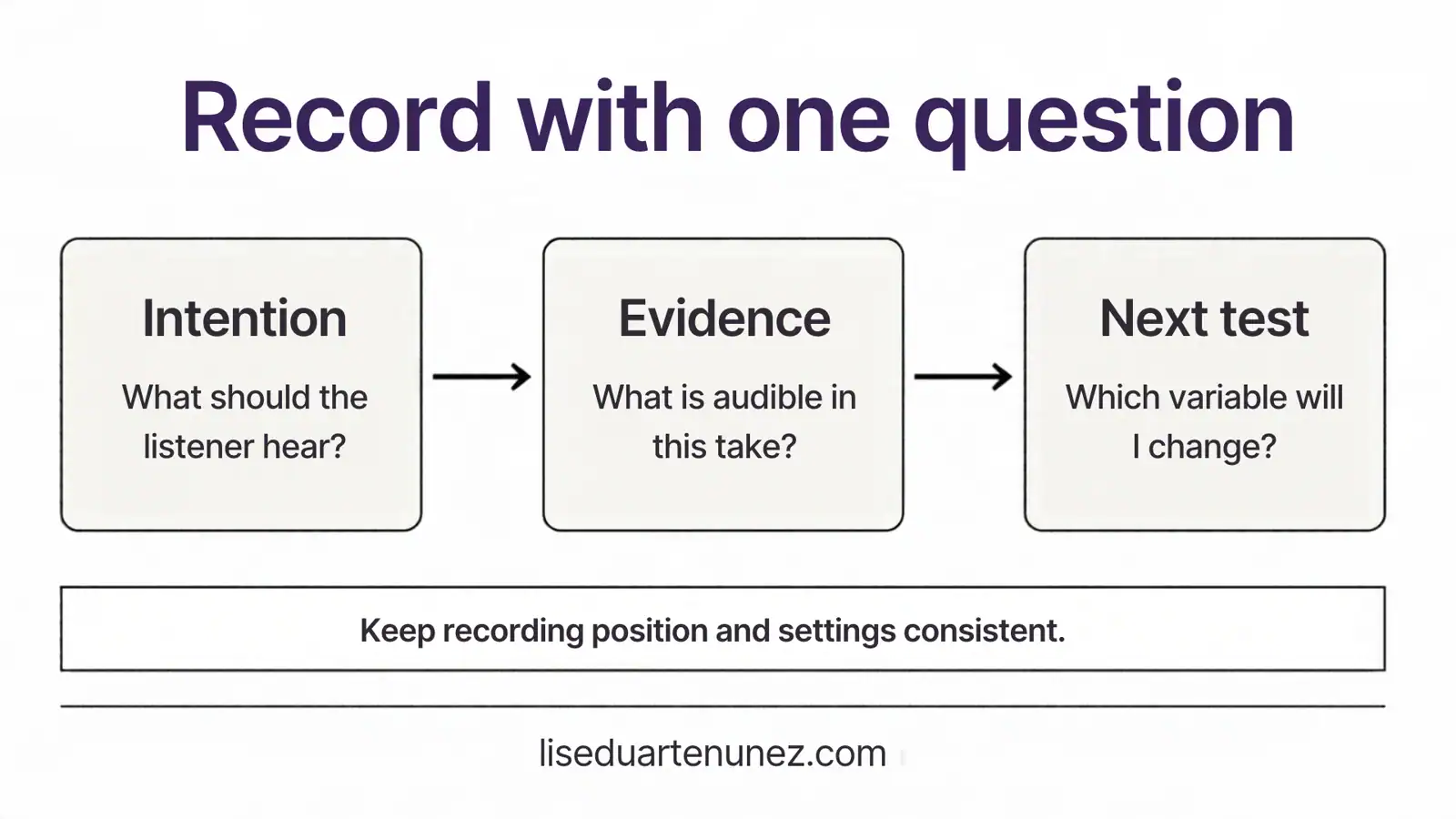
Keep the intended tempo, dynamic shape and recording position consistent. Test one feasible release adjustment, then listen for three things:
- Does the preceding sound retain the weight you intended?
- Is its ending audible as an unintended interruption or extra gesture?
- Can the next softer event be followed clearly?
Describe a difference you can locate before naming its cause. A recording that seems less resonant does not by itself prove a better interpretation; microphone position and the rest of the phrase matter too.
Preserve the strength of the roll
Preparing a release should not automatically make the preceding roll lose its written energy early. Listen to the whole arc: the body of the roll, its connection with the next event and the eventual change of texture.
If preparing the damping alters your rhythm or dynamic before you intended, isolate that coordination at a manageable tempo. Then restore the complete passage. The point is not to make the release more visible, but to make the transition sound deliberate.
Use the practice recording guide for a repeatable comparison, and the orchestral entrance guide for the context before the first note. In MTDM, the intended musical result guides the choice of means, and listening tests that choice.
Questions about Beethoven 9 timpani damping
Must every written rest mean immediate damping?
Do not turn that into a mechanical rule. Respect the written timing and consider articulation, intended duration and surrounding texture with your teacher or conductor. Judge the resulting connection, not only the movement.
Should every player copy the release in a short video?
Use it as a question to investigate. The video does not reproduce your room, instrument or ensemble balance. Test a viable solution in your own context while retaining the score’s rhythm and dynamics.